The Mystery Behind the First Gamebook Ever Made

I learned something amazing. And the more I looked, the more I found an odd and fascinating mystery within.
New Ideas
When we think of gamebooks we largely imagine fantasy or children's adventure titles.
These books tend to be written in the second person with limited character engagement, as you play the role of hero. A reader is presented with many inconsequential choices, such as "Do you turn left?". A reader's outcomes aren't often clear, leading to many fail states or drastic shifts in tone. A reader who wants to understand how all choices within the gamebook play out is required to make their own chart of the varied outcomes, as these are rarely provided.
But what were gamebooks before these genre conventions were established?
I recently learned that the first gamebook in print was "Consider the Consequences" by Doris Webster and Mary Alden Hopkins. Published in 1930, it allows readers to experience courtship, dating, and marriage from a young women's point of view during the Great Depression.
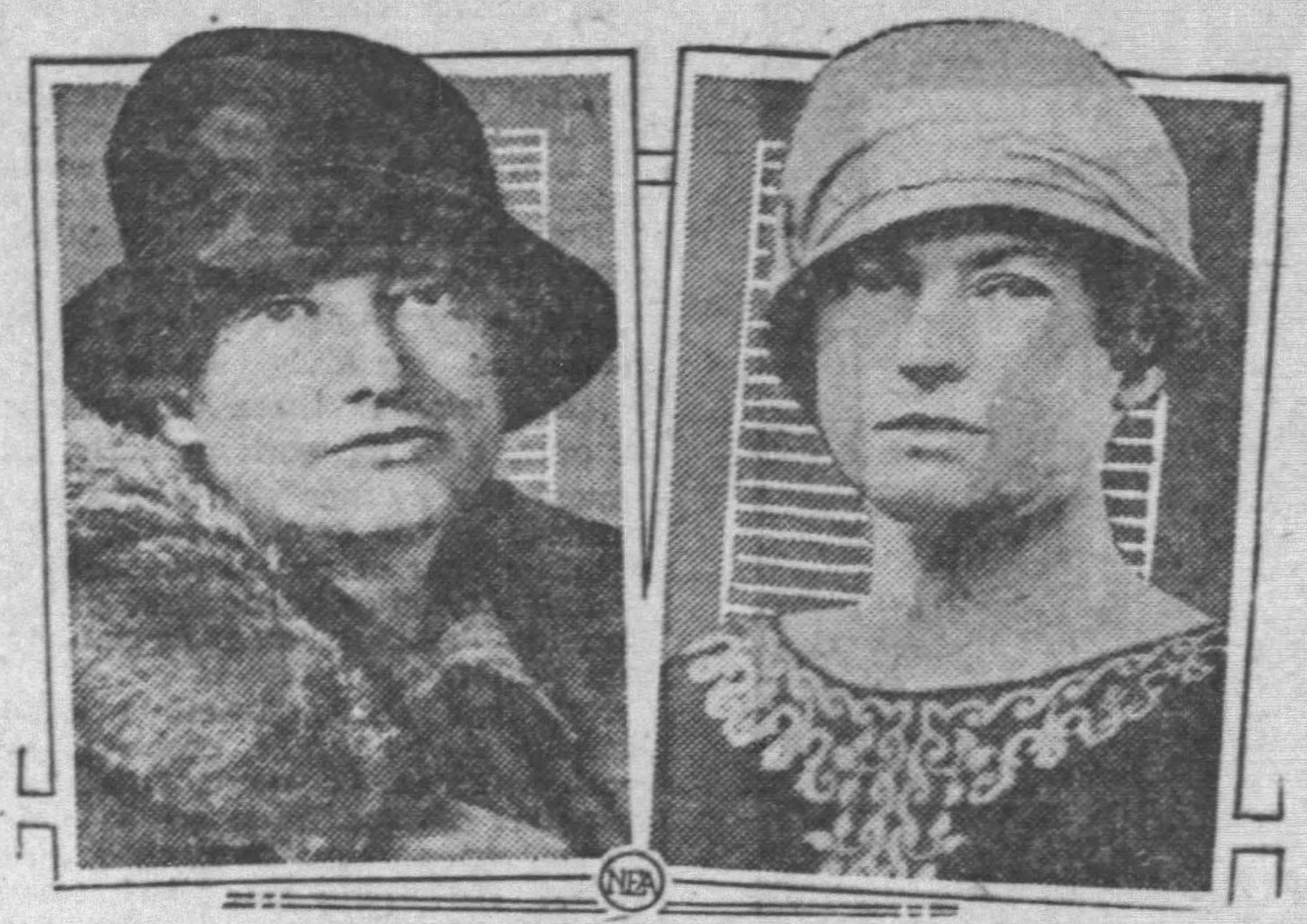
Its interior flap description says:
Here is a brand new idea in fiction–a story which ends in any one of a dozen or more different ways, depending entirely on the taste of the individual reader.
The idea is this:
In the opening pages we meet three characters –Helen Rogers and the two men who love her, Jed Harringdale and Saunder Mead. Jed and Saunders are opposite types, and Helen if forced to choose between them. The reader at this point decides which man Helen is likely to choose. If she takes Jed, the story continued in one way; if she chooses Saunders, an entirely different tale unfolds. Each of these tales leads inevitably to several turning points, at each of which the reader must decide which course to follow. Thus the ultimate outcome depends on a number of alternative decisions the reader has seen fit to make.
It is a delightfully original idea, ingeniously worked out. Try it for yourself, and see how logically the denouement follows the decisions you make for each character!
The first gamebook ever written was created by two women, is a third-person dating sim, has multiple interweaving tales, 43 different endings, can be played alone or with friends, includes a choice map diagram (!). It would take another 17 years for another book to be published with interactivity, but nearly 50 before these books hit mainstream popular culture. Swoon.
While any info is hard to verify, it's said that:
All of the books were marketed as "party books," fun to read and play aloud with a group of friends.
What a fascinating inverse of the second person, non-character-based, dice-rolling action fests!
The Mover
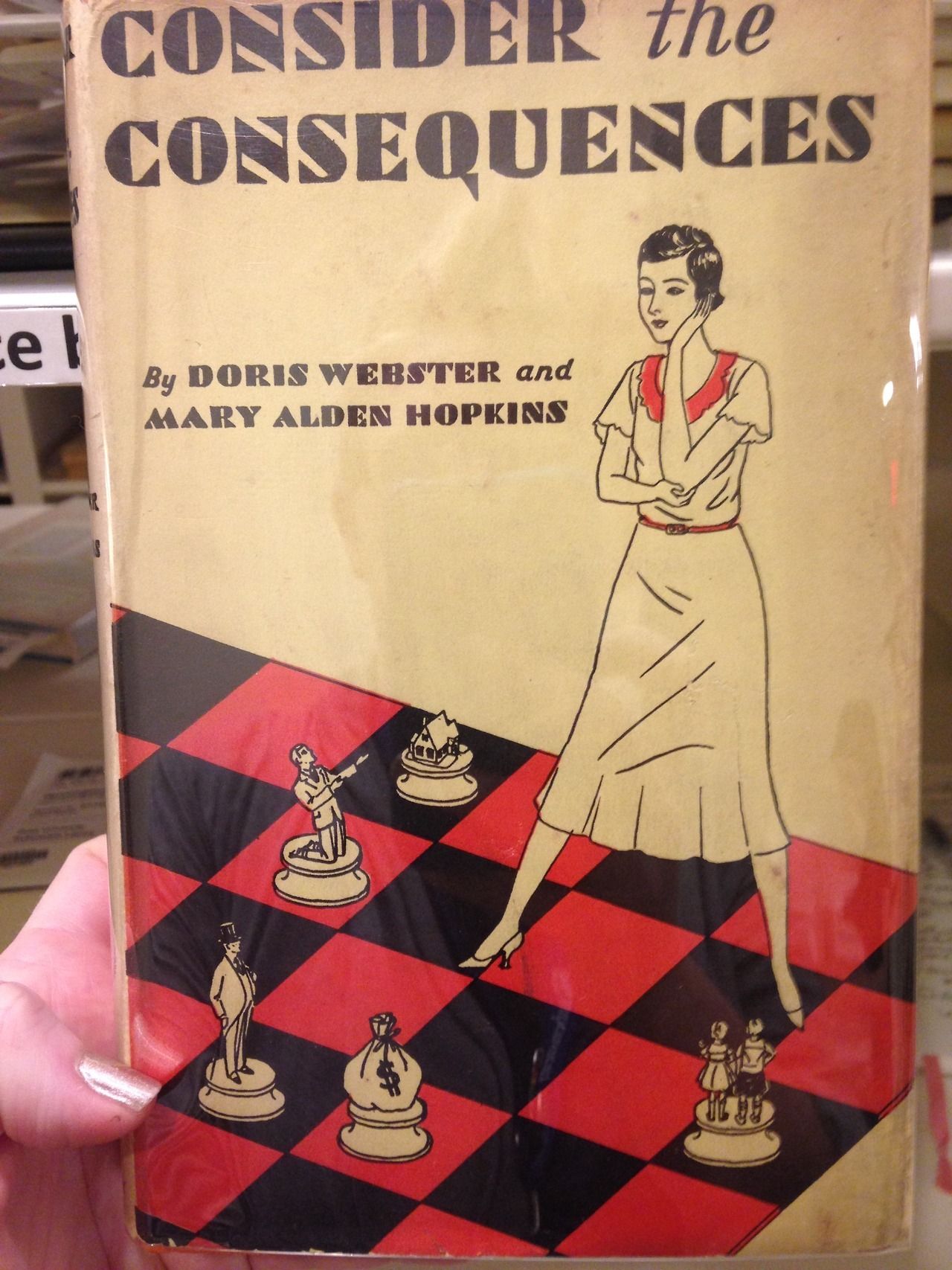
Mary Alden Hopkins led a fascinating life which is nicely summarized on her Wikipedia entry:
Mary Alden Hopkins (1876 – November 8, 1960) was an American journalist, essayist, and activist. She served as editor for several leading magazines and did freelance work for literary groups including The Atlantic Monthly, The American Mercury, and The New York Times magazine.[1] Hopkins published polemical pieces in both mainstream and special-interest journals on labor reform, dress reform, birth control, pacifism, vegetarianism, and suffrage. Her creative writing was shaped by her politics as she wrote poems and novels about peace, women's suffrage, and other social issues.
In a shocking turn:
After the United States declared war on Germany in April 1917, the Woman's Peace Party (WPP) supported US intervention except for the New York branch of the party (NYC-WPP). The NYC-WPP's anti-war sentiments appeared in their bi-weekly periodical Four Lights with a gender-based critique of American society and democracy.[8] On July 14, 1917, Hopkins, a member of the NYC-WPP along with other young educated radical reformers, wrote an editorial for Four Lights titled, “What are the War Aims and Peace terms of the American Women?”[9] Hopkins mocked women's involvement in war work in two ways. She first argued against the assumption that women's presumed roles as mothers and wives would prevent them from participating in politics. Secondly, she argued that the work that women did in their lives such as raising their children would end up being pointless because war would lead to the oppression and death of their children in battle.[10] After the United States Department of Justice (DOJ) claimed that two of their issues were traitorous, the post office refused delivery of the journal, the DOJ interrogated the women as the NYC-WPP's anti-war sentiments were seen as unpatriotic, and Four Lights ceased production in October 1917.[10]
Then she kept writing for decades, working with Doris at the age of 53 to create a new genre of fiction. She would continue creating, eventually publishing two traditional novels at the age of 71 and 76.
If Mary was the brash, opinionated, political, New York literati, then who was her co-author?
The Mystery
Doris Webster wrote many books, all with Mary Alden Hopkins:
* "I've Got Your Number ! - A Book of Self-Analysis" (Republished later as "Instant Self Analysis")
* "Consider the Consequences!"
* "Dynamite: Or, What Do People Think About You?"
* "Can You Think? A Game To Test Your Logic"
* "Tell Your Own Fortune"
* "Marriage Made Easy"
Notice a trend in these? They're all ergodic (except that last one)!
'Marriage Made Easy' is forgiven for having the best opening ever:
HOW TO CHOOSE A HUSBAND
SCIENTIFIC inquiry has ever been frowned upon.
Galileo was put in jail for finding out that the world
is round. Harvey was considered sacrilegious for
discovering the circulation of the blood. The path
of progress is stained with the blood of its martyrs.
Against the vociferous objections of the older gen-
eration, the girl of to-day has undertaken heavy re-
search into the nature of man--no, men. She utilizes
all modern inventions, like the automobile, the night
club, and the telephone, to aid her search for data.
Criticism does not deter her. Her zeal is fanatical.
The following analyses merely point the direction
in which young women of varying temperaments
should carry on their investigation. The printed
word can not take the place of eye-to-eye and hand-
to-hand scrutiny. Many a dancing shoe must be
worn shabby ere a search ends.
Preach! The modern invention of the night club is a tool.
While Doris Webster sounds like a common name, it turns out there were only 15 birth or death certificates issued under this name at the National Archives. Factoring in the people born too late to have co-authored with Mary, we're down to 7 candidates. Yet, cross referencing their zip codes, we see that none of them were on the East coast, which is where Mary lived until her death.
It's entirely possible this list is incomplete, inaccurate, that people moved from Missouri to NYC, or that Doris decided to give up her life of writing for a serene life of cafes and romance.
Is Doris Webster real?
Not being able to find someone one hundred and fifty years after their birth isn't exactly surprising, but for someone who was well-known to publish multiple books, it is a bit curious. After a bit of searching I began to wonder: what if I can't find any record of Doris Webster for a much more unique reason? What if Doris Webster is simply a nom-de-plum for Mary.
Mary Alden Hopkins was a serious author, writing on adult topics. Century Co publishing (soon to be taken over by a CEO named Schuster) needed to publish some easy wins during the great depression and suddenly the focus on topics mattered less than the bottom line. What if Mary had to make a choice: do I give up the reputation I've worked hard for or do I take the job for a check?
As a 50-year-old woman in the 30's she needed a way to appeal to a younger audience. A fake name would allow her to avoid any shame, play up youthful trends, while still allowing herself to still receive credit.
This would explain why there's no record of Doris Webster publishing her own work. Every publication was co-authored with Mary.
NOPE
After a bit more investigation, my fun theory was dashed. Doris was made of flesh and not magic dust. Shockingly though, her tale may be more interesting than Mary's.
Doris Webster was born in 1885 in Brooklyn. Her early years are hard to track, but she is known to have lived with her parents well into her thirties, working eventually as a reviewer for Publisher's Weekly.
Her romantic requirements aren't as murky, as seen in the book 'Marriage Made Easy' where she says:
"Try to marry a man who has money, but who is ambitious to make much more."
At the ripe old age of 35, 14 years past the average age of a bride in 1920, she achieved this goal by marrying Samuel Charles Webster.
Now you may be aware of a famous publishing Webster? Believe or not, there's another famous publishing Webster in America's past by the name of Charles L. Webster!
This is where things get fun.
Charles L. Webster and Company was a subscription publishing giant, debuting Twain's 'Adventures of Huckleberry Finn', General Ulysses S. Grant's 'Memoirs', as well as works from Tolstoy and Whitman. These books were so popular that the US government had thousands of men canvassing for fakes. Grant's work alone was noted by the publisher as expected to generate over $150,000,000, in today's cash value (though outside of the flash of the media, it only generated a paltry $30,000,000).
Clemens (aka Mark Twain), who had used his blood relative as the frontman for the publishing company, later called Webster "one of the most assful persons I have ever met–perhaps the most assful". The parties came to blows over money, forcing Clemens to push out Webster and leading to a near immediate bankruptcy for the publisher.
Now here's where it gets spooky: Charles L was Samuel's father and Doris was Mark Twain's niece's daughter. What a strange twist of fate!
30 years after the collapse of the Charles L Webster and Company, Doris found her man, Samuel. He was from a wealthy past, connected, and a published author himself.
In 1946 Samuel debuted a series of articles in the magazine The Atlantic, where he defended his father and shared unpublished letters from Clemens. These painted the famous author in a new, not entirely flattering, light.
After this, Doris is mentioned in other works, behind the scenes, working to interview people like Isabel Lyon. Isabel went from Clemens' secretary to secretly listing herself as Power of Attorney two years before his death. Clemens caught on, sued the pair, won, but after his death Lyon tried to sell some of his stolen manuscripts (unsuccessfully). These works would be published into a book titled "Mark Twain, Business Man".
The couple lived together until Samuel's passing.
Stories Untold
It's quite remarkable.
Doris Webster and Mary Alden Hopkins wrote books on choice, fate, and our futures. One title accidentally created a genre of fiction.
Mary's world was one of fighting for she felt was right, no matter the consequences. Doris' life was spent exonerating someone she felt was wronged, by her own blood.
So it's both slightly sad, and strangely appropriate, that we don't know them for their genre defining work. They didn't only write on these topics, they lived these lives. And their lives are much more interesting than any fiction could be.
For those interested in experiencing 'Consider the Consequences' you're in luck! While I've been unable to find a single version for purchase or scan, the Adventure Audience Radio Hour did a read through. After hearing their stories, I can't help but feel both authors would love to see their work enjoyed this way.